
Now, more than ever, I realize that I will never be content with a sedentary life, that I will always be haunted by thoughts of a sun-drenched elsewhere.
Isabelle Eberhardt
At each port, voyagers participate in field classes, field programs, and independent travel excursions. Because this is a floating university, coursework takes precedence with a large percentage of final grades determined by field classes while in various port cities. Throughout October and into November, Semester at Sea zigzagged through the Mediterranean where port cities provided a variety of experiences.
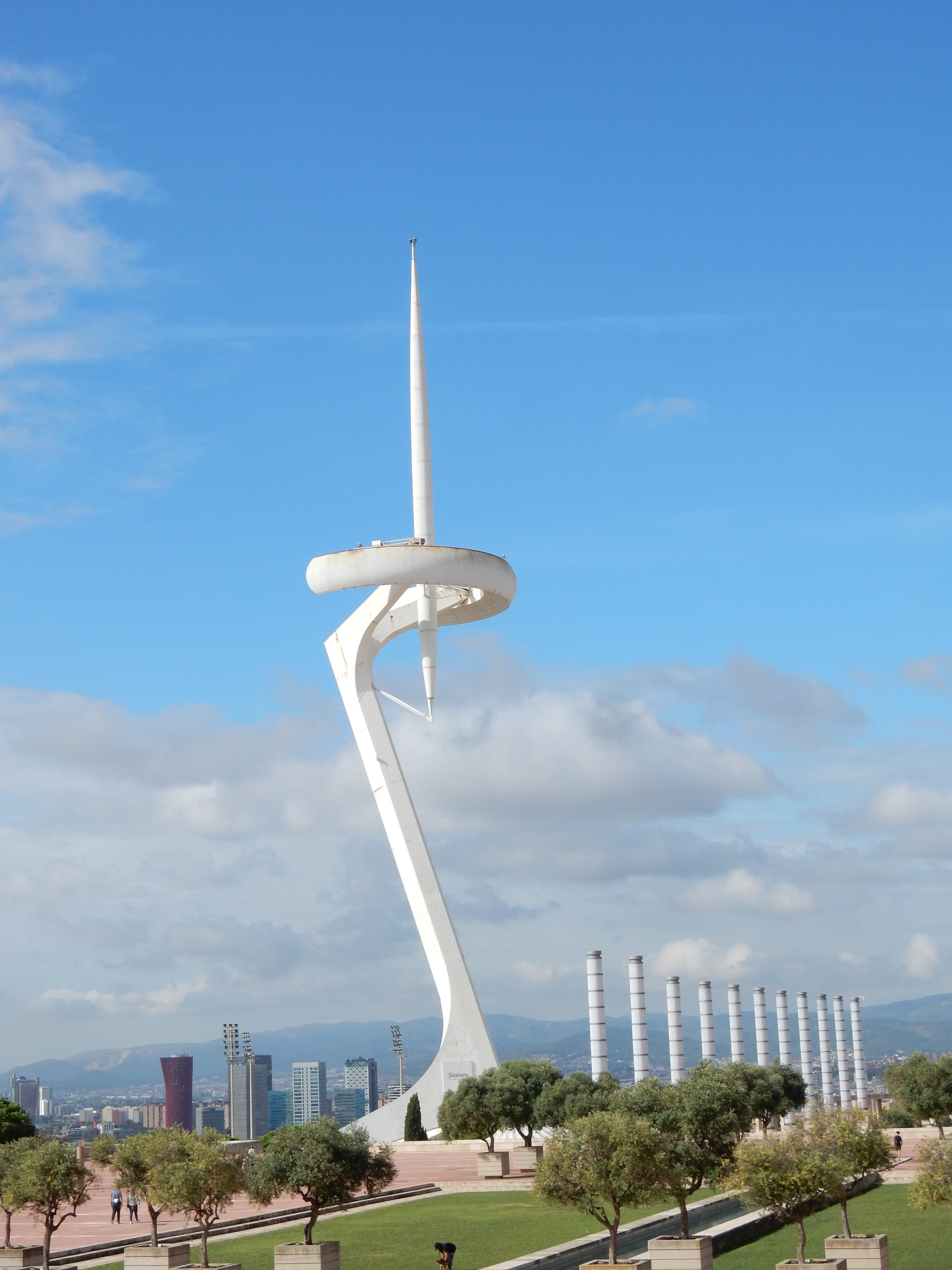
Spain: When we arrived in Valencia, Spain, Tim and I spent several hours in La Carmen Old Town touring the silk market, the Cathedral of Valencia (including the execution circle), L’Almoina archaeological center, and St. Nicholas Church (which I thought was even better than the Sistine Chapel). In the evening, our guide presented a ten-course tapas “meal” paired with a number of local wines. It was another fabulous historical/cultural experience! The next day, Sarah arrived in Valencia and met us at the ship, where she checked in and quickly packed a bag for Barcelona. Tim, Sarah, and I took an evening train to Barcelona and arrived at our hostel in time for bed. The next morning, we ate breakfast near Arc de Triomf (the location of the 1888 Barcelona Universal Exposition and Spain’s first International World’s Fair) and around the corner from the apartment our nephew, Sean, lived in while studying in Spain a few years ago. While in Barcelona, we toured Montserrat, Park Guell, La Sagrada Familia, and Olympic Stadium. We enjoyed another wine and tapas tour, as well as a live Flamenco show. Sarah and I left Tim on the train platform as we made our way back to Valencia and the MV World Odyssey, while he headed to the airport to fly back to Colorado. Sarah and I had another day in Valencia before leaving the port. It was October 9, Valencia’s day of independence. This is a historical commemoration of the date in 1238 when King James I officially entered the city, freeing it from Moorish rule. What a great way to end our time in Spain.



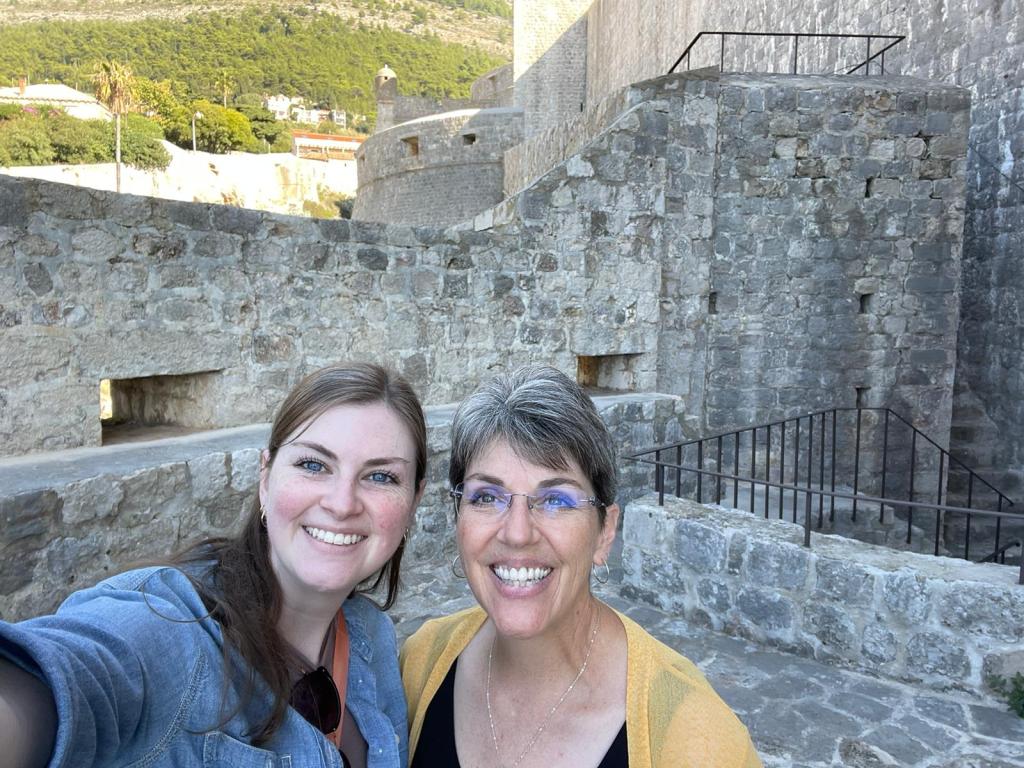
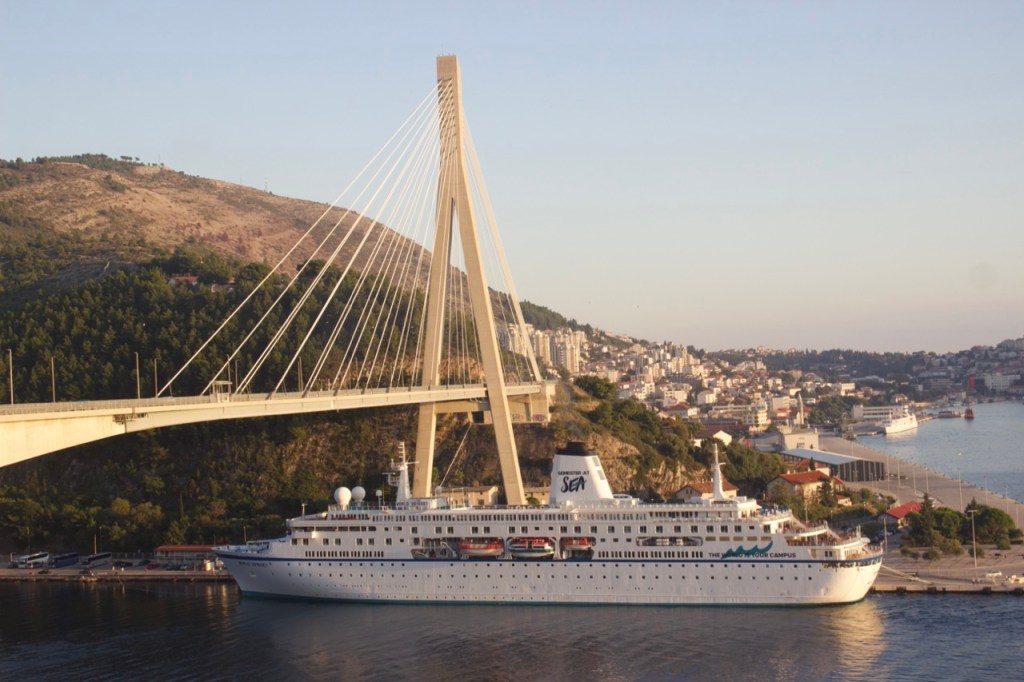
Croatia: Dubrovnik, Croatia, is a beautiful and pristine city. On our first day in port, we toured the Old Town and the 15th-century city walls. We learned of their war for independence that took place from 1991-1995. The physical damage from the war was well-documented in numerous museums, but the Old Town has been beautifully restored. There was one day in Dubrovnik when we happened upon an art museum and ended up on an all-day “museum crawl” visiting eight museums, including the Foundry Museum inside the city walls. We were the only two crawling in and out of secret passageways and discovering one of the city’s treasurers. That evening, as we sat outside along the Old Harbor at sunset, we ate the best meal since leaving Colorado (and since). On our last day in Dubrovnik, we drove to the top of the Srđ Mountain (part of the Dinaric Alps) on a two-way, single-vehicle width road. We had lunch and toured Fort Imperial, a defensive structure built by the French during the Napoleonic Wars.
Montenegro: While in port in Croatia, we decided to visit a couple nearby countries, including Montenegro (named “Black Mountain” by Venetians in the 16th century). This small country has only 650,000 citizens. We spent a day in the lovely villages of Kotor and Perast, including the Bay of Kotor Old Town and Our Lady of the Rock Island. We mentioned several times that this would be a great place to vacation – to spend several days taking in the beauty that surrounds the villages. My brother-in-law and sister would absolutely love Kotor and Perast.
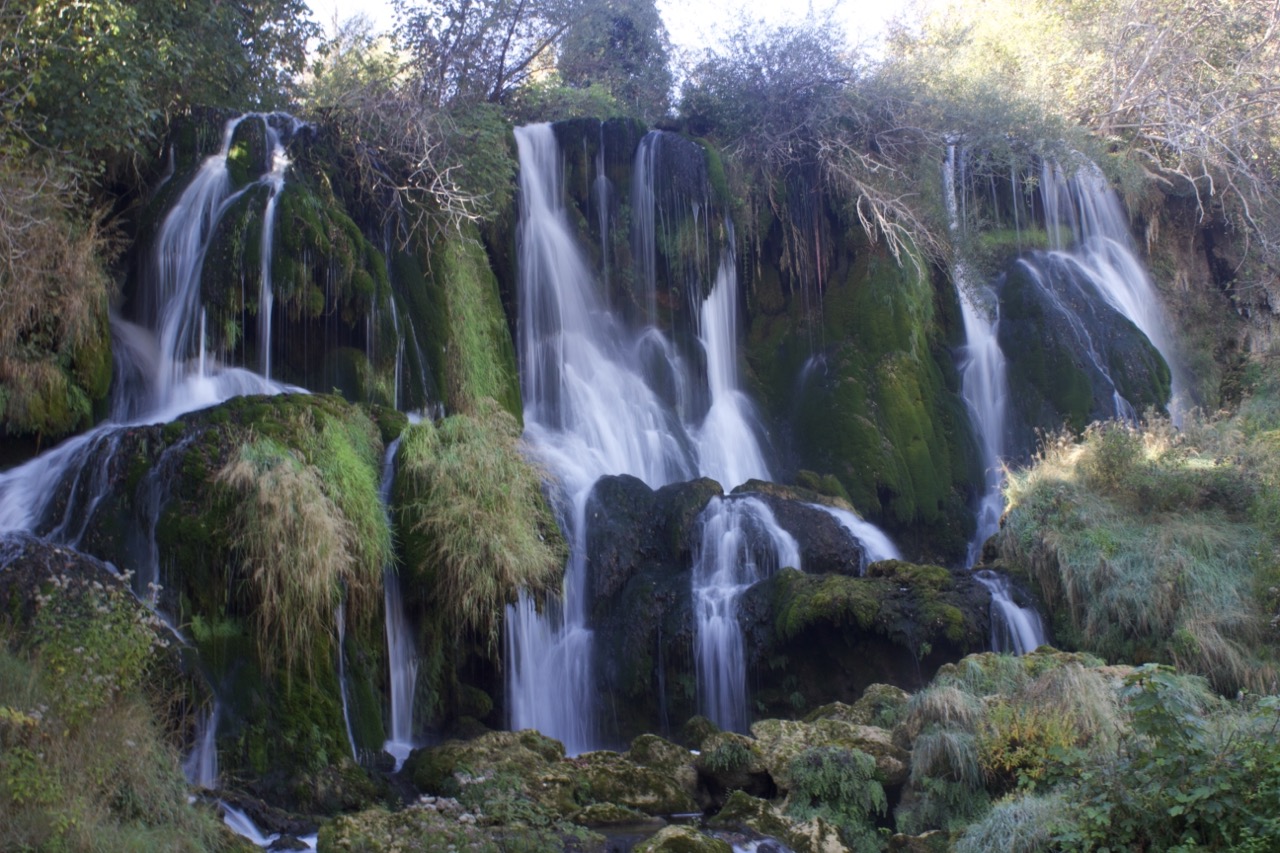

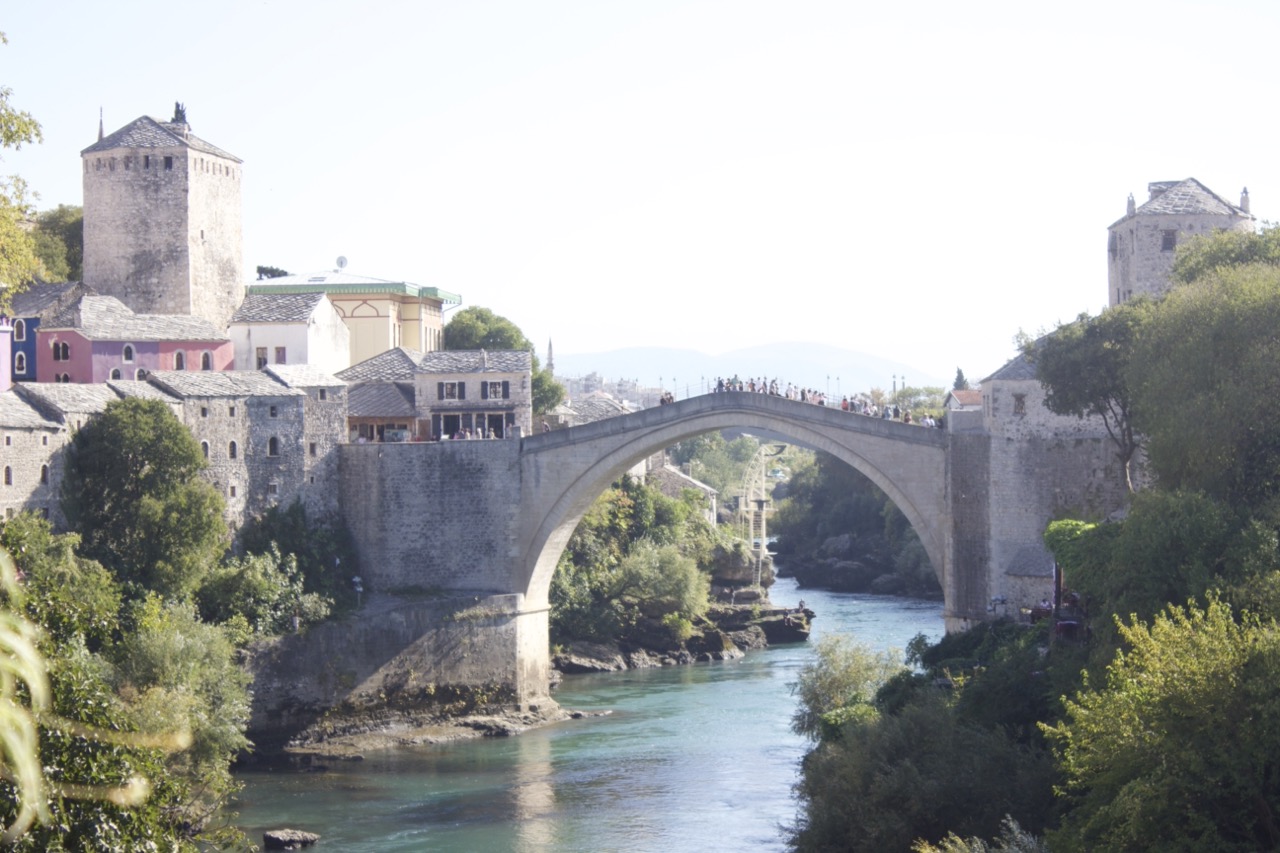
Bosnia and Herzegovina: Our friend from Hawaii, Paul, joined us on our adventure to Bosnia and Herzegovina as we visited Kravice Waterfalls and Mostar. We spent quite a bit of time taking photos, enjoying a traditional meal, shopping, and eating gelato. Velez Mountain in Mostar and the tall cypress trees were a highlight of the drive.
Greece: We ran a marathon while visiting Greece – not really, but it sure felt like it. Ironically, the term “marathon” is Greek. There are precisely 26.2 miles between Maratha and Athens – the distance of the first marathon run by men in the 1896 Olympics. My friend, David, flew to Greece from Colorado to join us for a full five days of exploring. We put on our best sneakers and hit the pavement running. As soon as we were cleared to disembark the ship, David was waiting in the terminal. We had breakfast, checked into our hotel rooms, and ate an authentic Greek lunch. We walked all around the city and spent time in The National Garden. We watched the changing of the Presidential Guards at the Tomb of the Unknown Soldier in front of the Old Royal Palace in Syntagma Square.
We took a mythological walking tour of Athens that included the Temple of Zeus, the Acropolis (and saw the Parthenon and the Temple of Athena), the Temple of Hephaestus, and Athens Agora. The Acropolis was considered the religious center of Athens; whereas, the Agora was the political or “democratic” center. Known as the first democracy, Athenians practiced this form of government until they lost the war with Sparta and democracy failed. We also learned that mythology provided a neutral ancestry for a large geographical area, but that Christianity ultimately destroyed mythology (both philosophically and physically, as most temples were destroyed) when Constantine the Great declared Christianity as the religion in 4 AD. My favorite aspects of this tour were the caryatids at the Temple of Athena and walking around the Agora where Socrates “hung out” and was sentenced to death after being convicted of impiety and corrupting the youth.


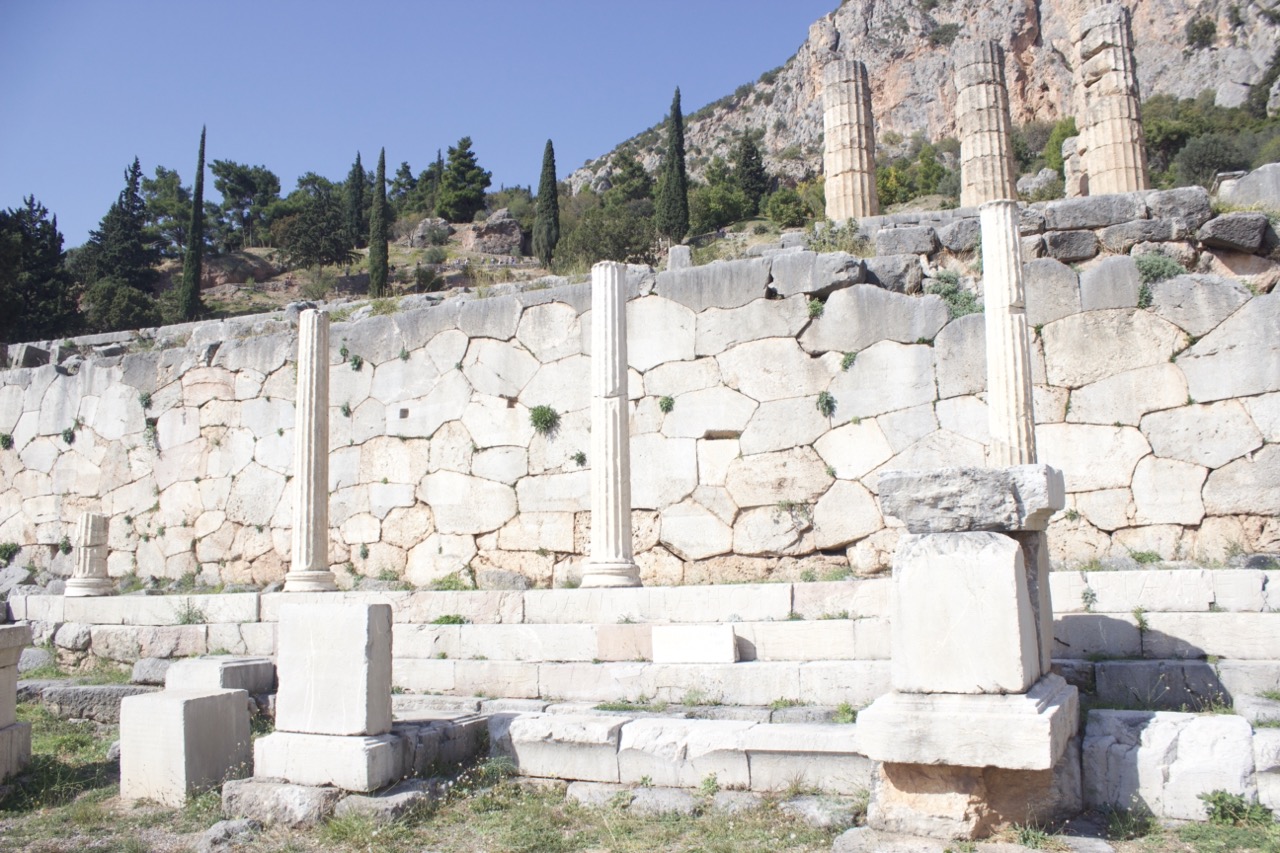
We spent a day in Delphi (the belly button or the “navel” center of the world) touring the Temple of Apollo and the Oracle of Delphi. According to legend, it was here that democracy was established when the god, Apollo, gave options or choices to Greeks enabling them to have free will. Our tour guide stated that all of democracy was based on the lie that this was Apollo’s idea. We also toured the Archaeological Museum of Delphi and saw the Sphinx of Naxos or the Sphinx of the Naxians.
I found it interesting that Athens celebrates Oxi (Ohi) Day on October 28 (my birthday), which commemorates the rejection by Greek prime minister Metaxas of the ultimatum made by Italian dictator Mussolini in 1940 and the subsequent Hellenic counterattack against the invading Italian forces during the Axis occupation. Oxi (Ohi) literally means, “NO!” There were Greek flags flying, a parade, and a lot of enthusiasm in the city. On that day, we decided to head to Corinth. Along the way, we toured the 11th-century Byzantine Daphni Monastery with many original gold-ground mosaics, including one depicting the bathing of the newborn Virgin Mary (believed to have been born on September 8). We stopped by the Museum of Corinth and then spent quite a bit of time at the Corinth Agora where the apostle Paul was put on trial for defiling Judaism. We ended the day eating dinner outdoors while listening to live music. The next day, we enjoyed breakfast and lunch before David walked us to the dock. Our time together in Greece was spent looking at “a bunch of really old rocks” but filled with fascinating history at some really cool sites. It was especially sweet to have David join us on part of this adventure.
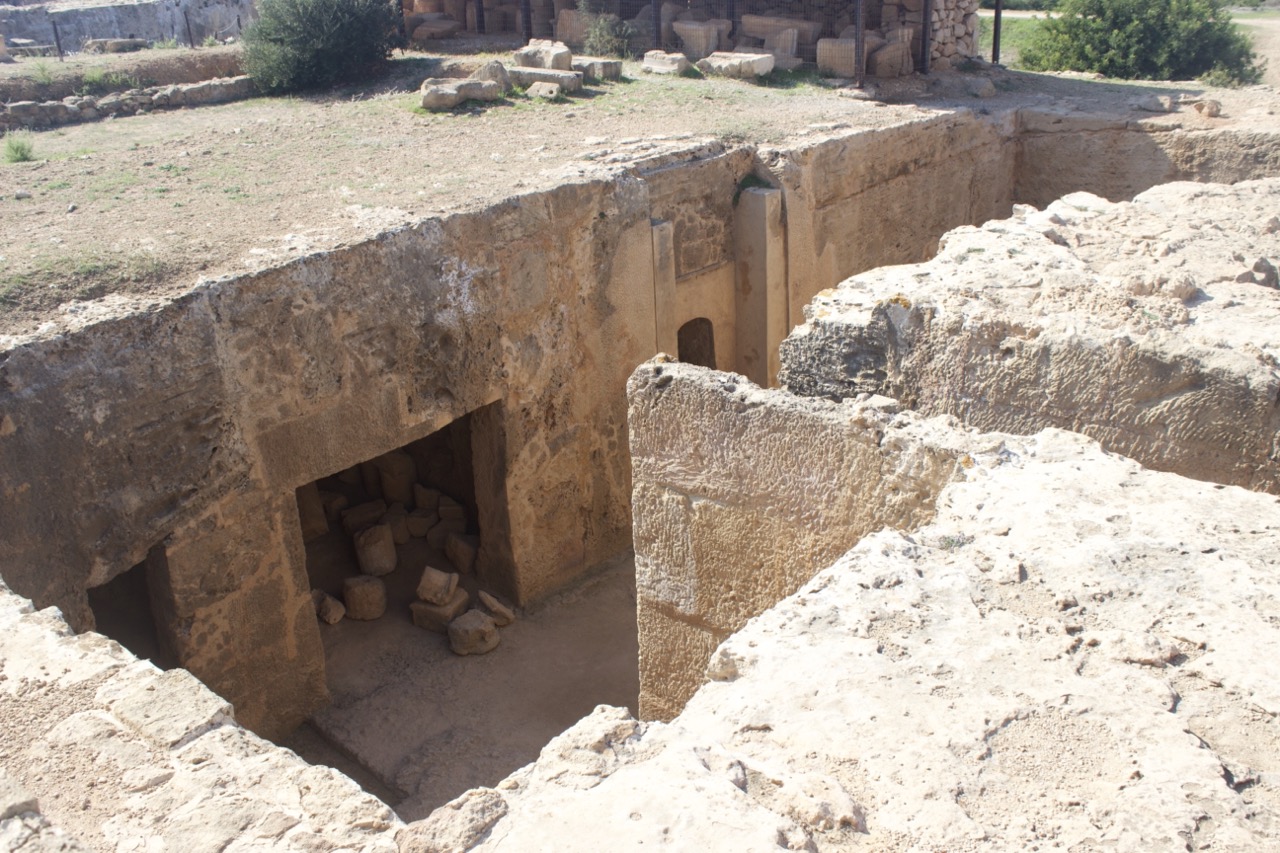
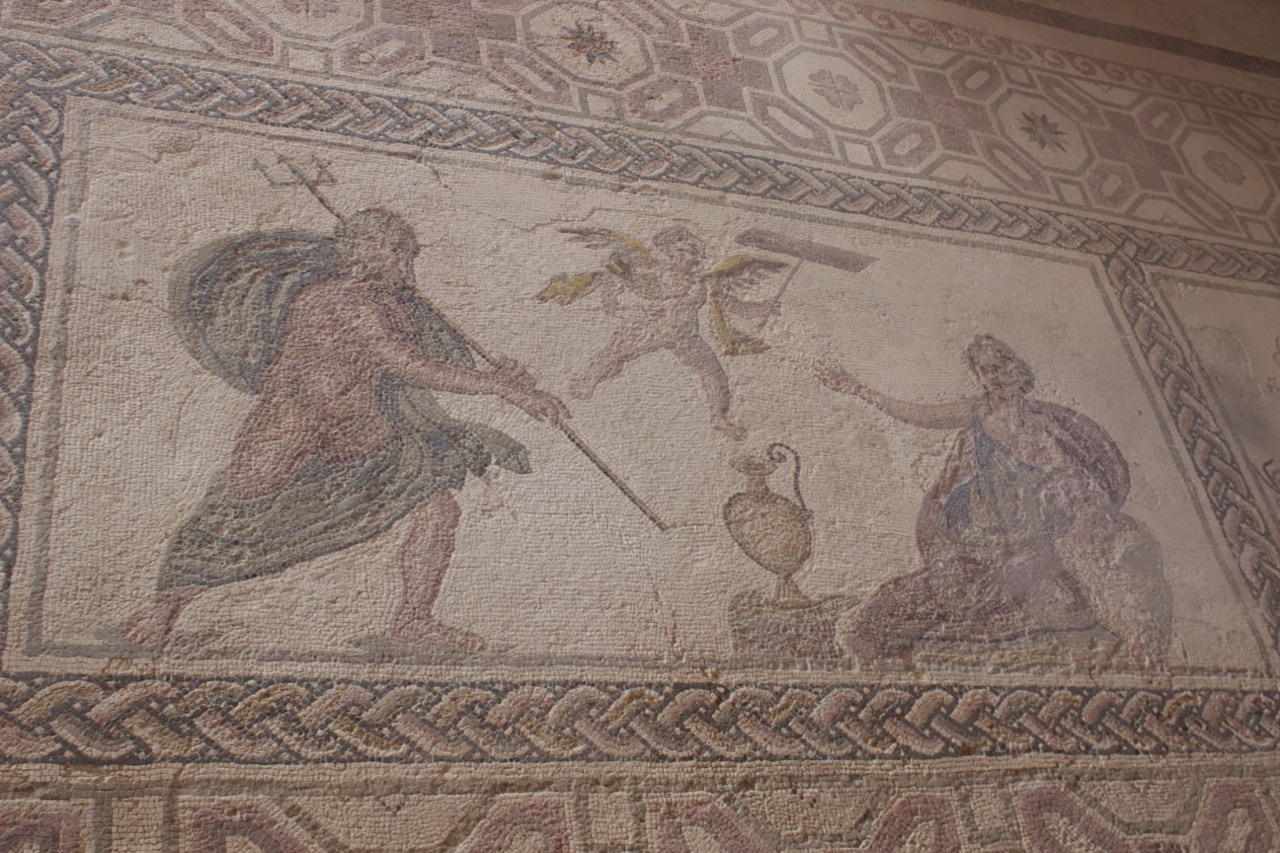
Cyprus: Having just left Greece and all of its mythological lore, we were eager to continue to tour ancient archaeological sites. Our first stop on our way to Paphos was at Petra Tou Romiou – the birthplace of Aphrodite. A local myth states that any person who swims around the Aphrodite Rock will be blessed with eternal beauty; however, we were not encouraged to get into the water. We then stopped at the Church of St. Paraskevi, which was a small basilica with five domes that form the shape of a cross and decorated with colorful frescoes. We then toured the Tomb of the Kings, which is an ancient necropolis carved out of solid rock. Stairs lead down to sunken courts with rows of stone columns. The passages below led to rooms with burial alcoves. We were able to climb in and out of the structure, which really surprised us. Finally, we arrived at Paphos Archaeological Park where we saw the most spectacular Roman mosaics, which were discovered accidentally by a farmer in 1962. Subsequent excavations revealed an extensive complex of Roman buildings fitted with exquisite floor mosaics showing scenes from ancient mythology. These mosaics, which are located in the House of Dionysus and portray the wealth and opulence of Imperial Rome, are considered among the best found in the Eastern Mediterranean.


On our final day in Cyprus, we traveled to the Choirokitia Neolithic Settlement which dates back to 6800 BC, followed by a stop at a local honey farm in Vavla village for a tour and a tasting of local products. What a thrill that was for this daughter of a beekeeper! We ended the day with lunch in Lefkara, a picturesque village famous for its silverware and its local lace, known as Lefkaritika. According to our guide and a local shop owner, Leonardo da Vinci visited the village in 1481 and bought an altar cloth, which he donated to the Milan Cathedral. Before leaving Lefkara, we stopped by the Church of the Holy Cross, which had a unique 13th-century silver cross and an 18th Century gilt iconostasis (a wall of icons and religious paintings, separating the nave from the sanctuary). One of the most interesting tidbits of information I learned while in Cyprus was that carob beans are used for many important things – in particular, I was told that carob syrup is healthy for diabetics. Additionally, carob beans were originally used to weigh the purity of gold. Four carob beans equaled one karat of gold; therefore 24 karat gold (100% pure) is 24 carob beans in weight.
~ ~ ~
Semester at Sea provides university students an opportunity to engage in experiential learning with the goal of broadening global awareness and social responsibility. Faculty, staff, lifelong learners, and companions who are fortunate enough to join a voyage are able to take full advantage of similar global experiences. The itinerary of the places we have visited and the things we have seen don’t compare to the personal growth we have witnessed among the shipboard community. I am no different. Prior to embarking on this five-month excursion, I knew I had a wanderlust spirit and fully expected to satisfy my longing for what lies beyond. Nevertheless, now, more than ever, I realize that I will never be content with a sedentary life, that I will always be haunted by thoughts of a sun-drenched elsewhere.
 Chasing Verbs
Beautiful reflections of a once in a lifetime adventure. My wish for you is that it will be a twice in a lifetime experience!
LikeLiked by 1 person